Guide
Concrete, fiberglass or terra cotta?
The material decides how often you water, how much two people can lift, and whether the pot still looks right in ten years. Here's the honest comparison.
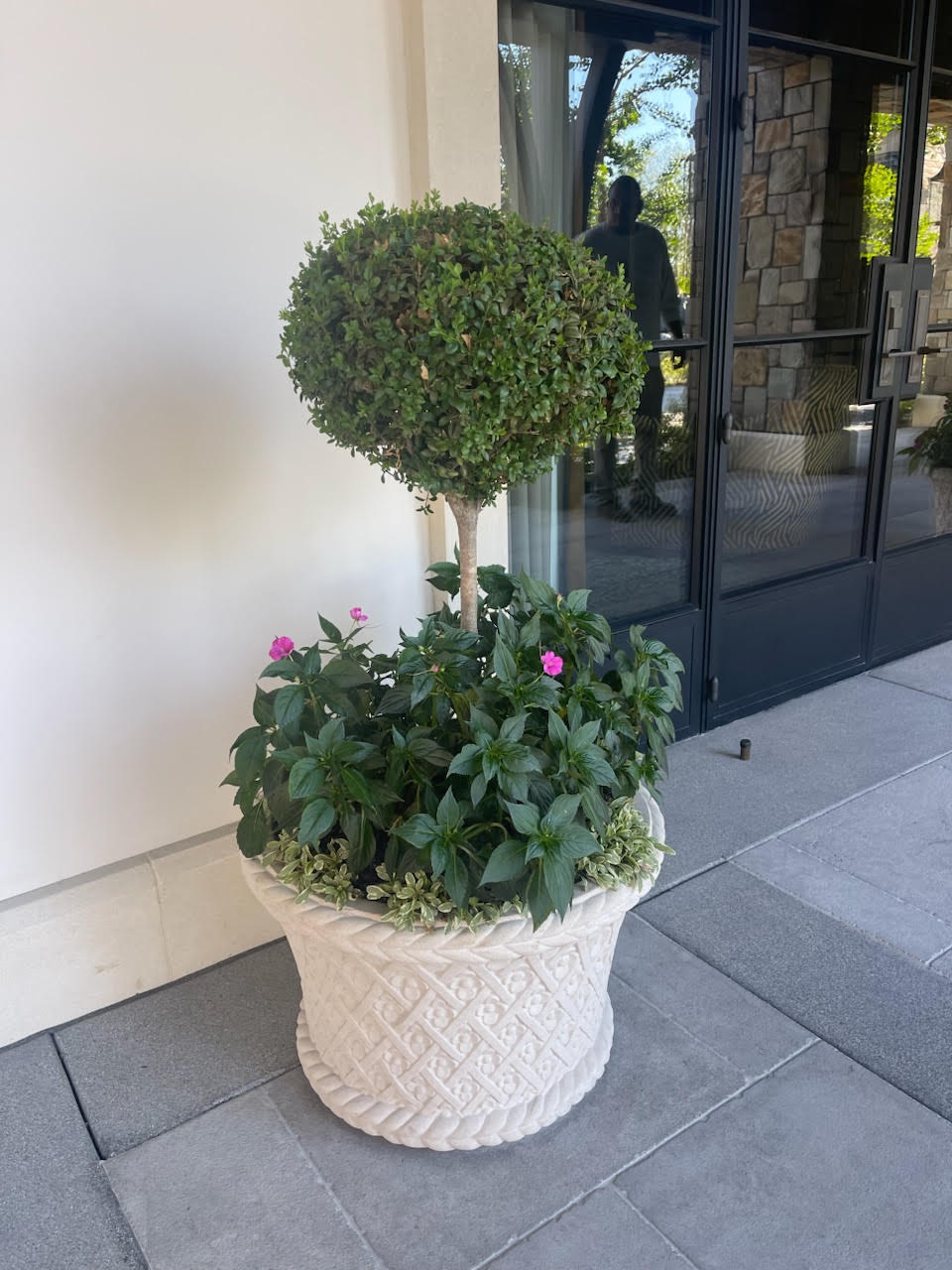
Pick the material for the job, not the price tag
Cast stone and concrete are the heavyweights. They don't move in wind, they weather to a soft stone tone, and they take crisp cast detail, basketweave, fluting, relief. The trade-off is weight: once placed, a large cast stone planter stays where it is. Best for permanent entries, terraces and anything formal.
Fiberglass and composite are the practical choice for rooftops, balconies, deep planters and anywhere you might rearrange. They hold water longer than clay, come in large sizes without the weight, and take a range of finishes. The trade-off is that finishes are painted or coated, so sun eventually dulls them, and a light pot in a wide open driveway can tip.
Terra cotta is the material Mediterranean plants actually want. Clay breathes, so roots get air and soil dries out between waterings, ideal for olives, citrus, rosemary, lavender and succulents. The trade-off is more frequent watering, mineral bloom on the outside, and vulnerability if it sits in standing water through a cold snap.
A quick rule: formal and permanent, use cast stone; large and portable, use fiberglass; anything Mediterranean you actually want to grow well, use terra cotta.
Good to know
- Weight
- Cast stone heavy, terra cotta moderate, fiberglass light. Check your access route first.
- Watering
- Terra cotta dries fastest, fiberglass slowest. Match this to the plant, not to convenience.
- Weathering
- Cast stone and clay improve with age. Coated fiberglass fades, expect refinishing eventually.
- Drainage
- Whatever the material, it needs a hole and it needs to sit off the ground.
See it in person
Everything is on the yard at Jardin
170 S Kinneloa Ave, Pasadena, CA 91107. Walk the yard, measure the pieces, and mention JARDIN at the counter so the team knows the website sent you.
Keep looking